
What is a Punnett square and how do you use it?
We talk about this in our 10th Grade Workbook. The Punnett square was created by a British geneticist named Reginald Punnett in the early 1900’s. This was a technique devised to understand the simple hereditary genetics and traits from parent to offspring.
Using a Punnett square, you can see the correlation between the traits of parents and their offspring by matching the dominant and recessive traits in a simple grid-style table.
Many classrooms have experimented with pea plants to replicate Mendel’s experiment with simple genetic traits and a Punnett square. This was a rudimentary experiment that showed that simple genetic traits could be predicted using Punnett’s model using two varieties of pea plants and cross breeding them.
Today, more than 100 years later, we understand more about genetics and hereditary traits and the limits to the Punnett square. For example, eye color becomes more complicated to predict than a four-squared formula would allow. There are more than two genes responsible for eye color and eyes run on a spectrum. There are many possible shades and combinations.
Regardless, the Punnett square is still a valuable tool to learn. Students will learn basic genetic vocabulary and how hereditary traits work on a basic level.
The following video illustrates the simple experiment students can perform to learn about how the Punnett square works.
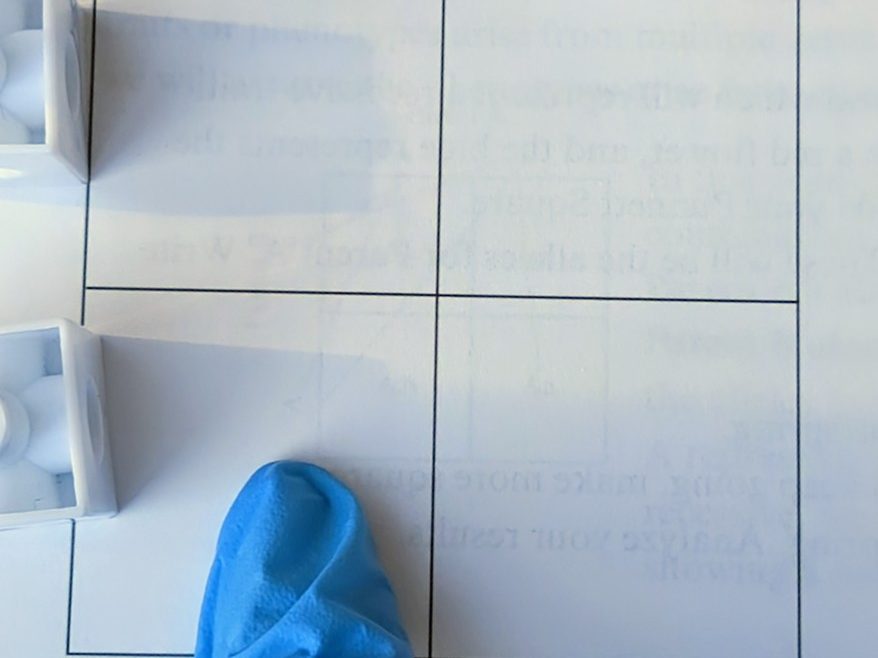
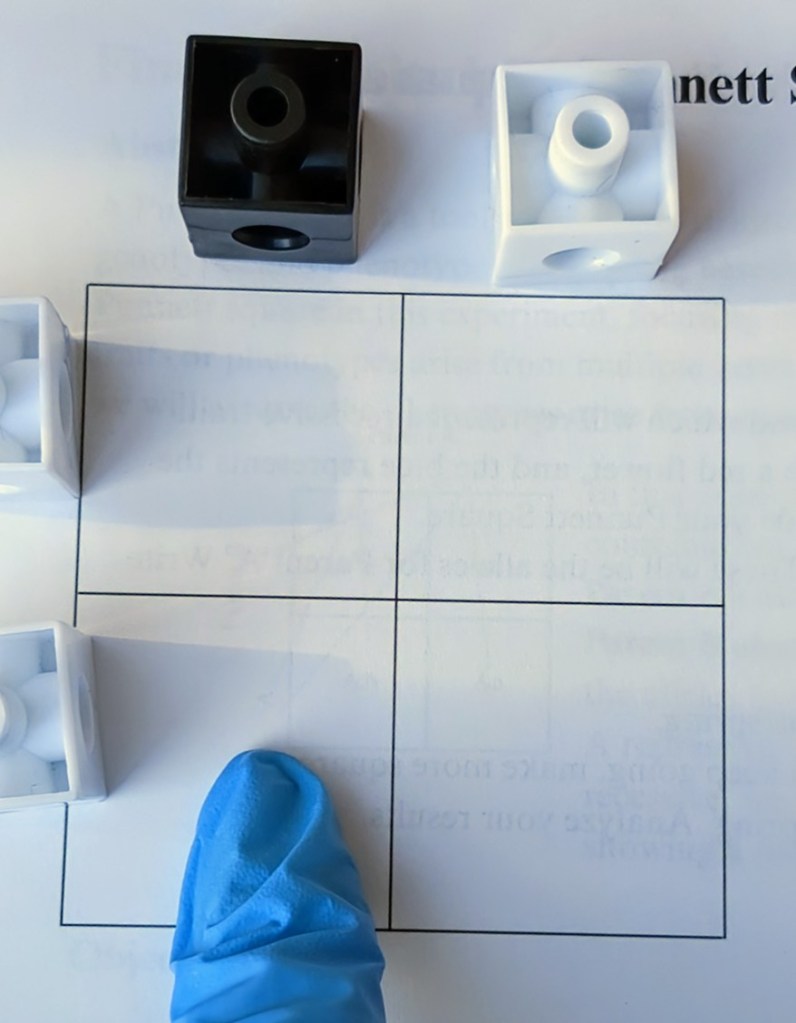
This simple 10th grade biology experiment requires two different colored objects to represent the alleles present in genes of parents. Each color will be assigned either as recessive or dominant. The students will then pull the objects (beads, beans, blocks, etc.) at random from a container and apply them to the provided squares in the workbook as shown above.
They will fill out the offspring squares by using the Punnett square method and then assess any patterns they find.
This may seem like a very simple experiment, and it is, however it teaches the basics of genetics while allowing for an entertaining time. Having a conversation about the traits that will show up in the next generation of the species can help bring this experiment to life. Allow them to wonder about the traits of animals such as the color of a litter of cats. A fun topic to explore further would be calico cat patterns and traits passed through only x or y chromosomes.
For more experiments, visit our other Posts.
 Beyond Books Learning Resources
Leave a comment